
Kenneth Arnold's Flying Saucers
On June 24, 1947, a civilian pilot named Kenneth Arnold was searching for a downed Marine transport near Mount Rainier when he watched nine bright objects flash past the mountain at a speed he calculated at roughly 1,700 mph. The wire-service reporter he spoke with the next day garbled his description into a two-word phrase that defined the next eighty years of UFO discourse: flying saucers.
Our read
Evidence — 8 claims
5 supported · 2 contested · 1 open
Sources — 4
4 sources · journalism + court / archive + primary media
Contested
Competing readings of the record remain live.
- SupportedArnold observed nine objects near Mount Rainier on June 24, 1947, estimating their speed at roughly 1,700 mph.
- SupportedThe phrase 'flying saucers' originated in Bill Bequette's AP wire of June 26, 1947, misrepresenting Arnold's motion description as a shape description.
- SupportedArnold described the objects as crescent or bat-winged in silhouette, not saucer-shaped.
- SupportedProject Sign designated the Arnold sighting as Incident 17 and never produced a conventional explanation its investigators were satisfied with.
- ContestedProject Blue Book's final 'mirage' classification was applied during a bulk reclassification push, over the objections of original Sign-era investigators.
- ContestedSkeptical candidates — pelicans, mirage, meteor fragments — have not been widely accepted as fitting Arnold's full description.
- SupportedArnold's account was published in the Spring 1948 inaugural issue of Fate Magazine.
- OpenArnold reported that a United Airlines crew described a similar formation over Idaho nine days after his sighting.
What remains unexplained
What Arnold saw remains unresolved after nearly 80 years. No skeptical candidate fits the full description; no confirmed explanation satisfies the Sign-era investigators' standard. The case is officially 'mirage' and practically open.
- 01The 'mirage' classification was applied over investigator objections and is not supported by the original Project Sign file.
- 02No proposed conventional explanation accounts for formation behavior, duration, and speed estimate simultaneously.
- 03Arnold's shape description vs. motion description discrepancy has never been formally corrected in the official record.
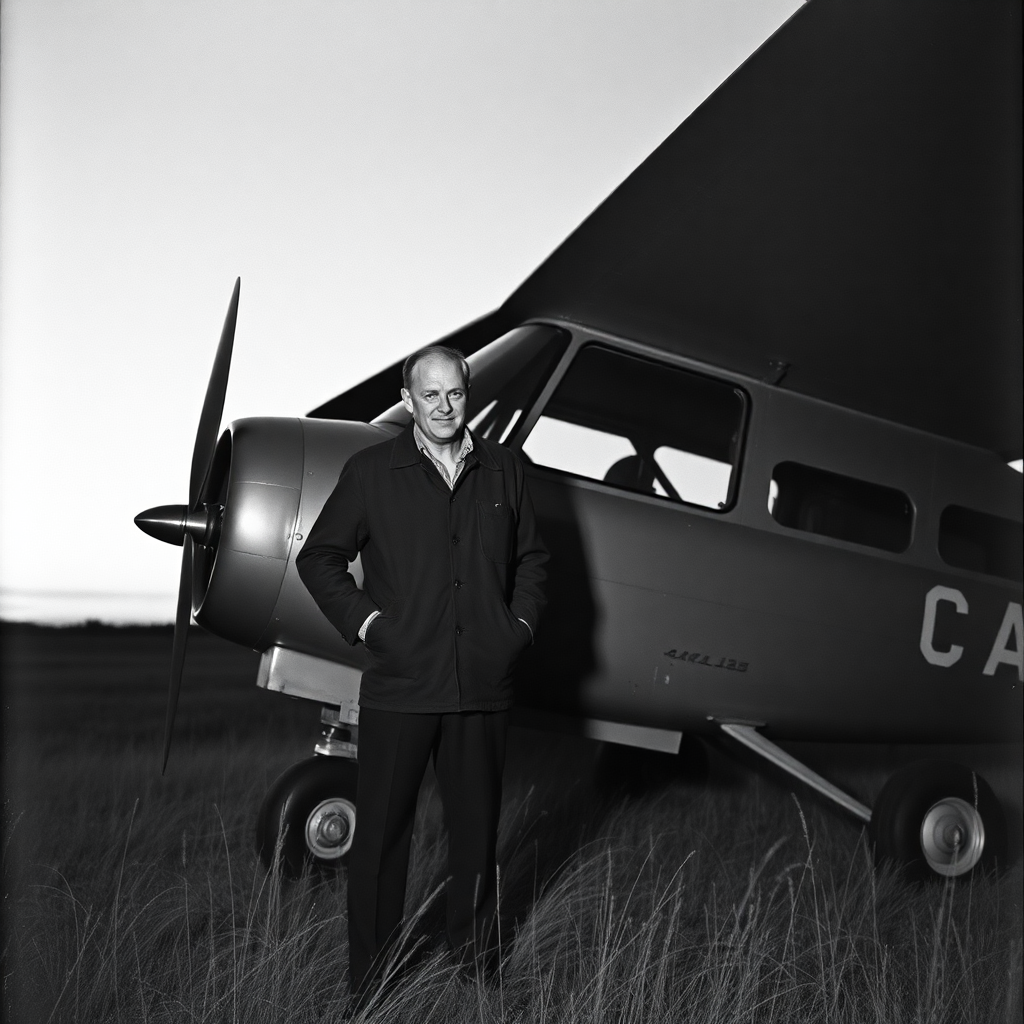
June 24, 1947. A civilian pilot named Kenneth Arnold was flying a CallAir A-2 over the Cascades, searching for a downed Marine transport near Mount Rainier, when nine bright objects crossed his path in a loose echelon formation. He timed them against known landmarks. He did the math. His estimated speed: roughly 1,700 mph — about twice what any aircraft of 1947 could do.
The next day, Arnold landed in Pendleton, Oregon, and talked to Bill Bequette of the East Oregonian. He described the objects' motion — a skip, like a saucer skipped across water. Bequette's AP wire, filed June 26, turned that motion description into a shape description. The phrase "flying saucers" entered the global vocabulary within 72 hours. Arnold spent the rest of his life clarifying that he never said the objects were saucer-shaped.
What happened
Arnold was an experienced pilot and deputy federal marshal — not a crank, not a first-time flyer. His account, published in the Spring 1948 inaugural issue of Fate Magazine and later expanded in The Coming of the Saucers (1952), is detailed and internally consistent. He described nine objects, crescent or bat-winged in silhouette, moving in a weaving chain formation at high altitude. The observation lasted somewhere between two and three minutes — long enough that misidentifying a brief flash or glint seems hard to sustain.
The Air Force opened a file on it almost immediately. Project Sign designated it Incident 17 and investigated. The Sign-era investigators never produced a conventional explanation they were satisfied with.
The evidence
Arnold's testimony is the primary evidence. There are no photographs, no radar returns, and no corroborating witnesses to the objects themselves — though he reported that a United Airlines crew described a similar formation over Idaho nine days later. His speed estimate depended on his timing the objects between Mount Rainier and Mount Adams, a distance he calculated at roughly 47 miles. The math is straightforward; the inputs are his own estimates.
Project Blue Book's final classification lists the case as "mirage" — but that tag was applied during a bulk reclassification push, over the objections of the original Sign-era investigators, who left the case unexplained. The mirage classification is not supported by the Sign-era file.
What the explanations don't explain
Skeptical candidates have included a flight of pelicans, a mirage of distant aircraft, and meteor fragments. None has been widely accepted as fitting Arnold's full account — particularly the formation behavior, the duration of the sighting, and his speed estimate. Pelicans don't time out to 1,700 mph between two Cascade peaks. Meteors don't hold a weaving echelon formation for two minutes.
Phil Klass and Robert Sheaffer proposed mirage and misidentification scenarios that work for parts of the description. They don't work cleanly for all of it. That's where the case has sat for nearly eighty years.
What's still open
What Arnold saw remains unresolved. The cultural consequence — "flying saucer" as the default vocabulary for unidentified aerial phenomena for the next several decades — is not in dispute. Whatever was crossing the Cascades that afternoon, the phrase it accidentally generated shaped every investigation, every witness report, and every government program that followed. Project Sign opened because of this case. Project Blue Book inherited it. The 2023 AARO framework is, in a line of descent, a consequence of it.
Arnold himself never claimed to know what he saw. He said it was real. He said it was fast. He said it wasn't a saucer. The record agrees on all three.
What did Kenneth Arnold actually see on June 24, 1947?
Arnold reported nine bright, crescent- or bat-winged objects flying in a weaving chain formation near Mount Rainier at an estimated speed of roughly 1,700 mph. He timed them between two known landmarks. What the objects actually were has never been conclusively identified.
Did Kenneth Arnold say the UFOs were shaped like flying saucers?
No — Arnold described the objects' motion, not their shape, as saucer-like: a skip across water. The AP wire filed by reporter Bill Bequette converted that motion description into a shape description, and the phrase 'flying saucers' stuck. Arnold spent years correcting the record.
What did the Air Force conclude about the Kenneth Arnold sighting?
Project Sign opened the case as Incident 17 and never produced a conventional explanation its investigators were satisfied with. Project Blue Book later reclassified it as 'mirage' during a bulk reclassification effort, a designation not supported by the original Sign-era file.
What are the leading skeptical explanations for what Arnold saw?
Proposed candidates include a flight of pelicans, a mirage of distant aircraft, and meteor fragments. None has been widely accepted as fitting Arnold's full description, particularly the formation behavior, the two-to-three minute duration, and the high speed estimate.
Why does the Kenneth Arnold case matter to UFO history?
Arnold's sighting is the origin event of the postwar UFO era — the case that prompted the Air Force to open Project Sign and introduced 'flying saucer' as global vocabulary within 72 hours of the AP wire. Every major U.S. government UAP investigation traces its lineage, in some form, back to June 24, 1947.
UAP
The Green Fireballs of New Mexico
Between December 1948 and 1951, witnesses across northern New Mexico reported vivid green fireballs that moved too slow and too level for meteors. Lincoln LaPaz, head of UNM's Institute of Meteoritics, ruled out the natural-meteor explanation after more than a hundred interviews. A 1949 Los Alamos conference settled weakly on "probably of natural origin." Project Twinkle, set up to photograph one, never did. The case is still officially open.
1948-12-05
UAP
Star sighting in Giethoorn, Overijssel
It was a nice night tour when all off a sudden a big bang was heard and a tiny gray star looking thing came blasting low over the water
2026-05-10
UAP
Chevron sighting in London, England
The shape looked similar to a normal car shape that we would think of. Main body was black and was lighting bright with yellow glare.
2026-05-10
USAF Project Sign / Project Blue Book
1947-1949
Unexplained — listed as 'mirage' in the final Blue Book recategorization, over the original investigators' objections
Project Sign opened Incident 17 within weeks of the sighting and never produced a conventional explanation Arnold's own investigators were satisfied with. The 'mirage' tag was applied later during Blue Book's bulk reclassification push and is not supported by the Sign-era file.
Skeptical analysis (various — Klass, Sheaffer)
1970s-onward
Likely misidentification — proposed candidates include a flight of pelicans, mirage of distant aircraft, or meteor fragments
None of the skeptical candidates has been widely accepted as fitting Arnold's full description, particularly the formation behavior and the duration of the observation.
Modern UAP scholarship
Ongoing
Origin event — credited as the inaugural case of the postwar UFO era and the source of the 'flying saucer' terminology
Whatever Arnold actually saw, the sighting's cultural footprint is the part that's not in dispute. The phrase 'flying saucer' enters global vocabulary within 72 hours of the AP wire.
- Bill Bequette — 'Impossible! Maybe, But Seein' Is Believin', Says Flier' (East Oregonian, 1947-06-25) and the Associated Press wire of 1947-06-26Quoted or summarized under fair use — follow the link for the originalaccessed 2026-05-25
- USAF Project Sign / Project Blue Book file on the Arnold sighting (Incident 17)Public record — free to reuseaccessed 2026-05-25
- Kenneth Arnold — 'I Did See the Flying Disks' (Fate Magazine, Spring 1948 inaugural issue)Quoted or summarized under fair use — follow the link for the originalaccessed 2026-05-25
- Kenneth Arnold and Ray Palmer — 'The Coming of the Saucers' (1952), first-person account by the witnessQuoted or summarized under fair use — follow the link for the originalaccessed 2026-05-25
This account draws on publicly available sources and historical records. Report a factual error → How we source and correct →
As an Amazon Associate I earn from qualifying purchases. Other affiliate links may earn a commission at no cost to you.