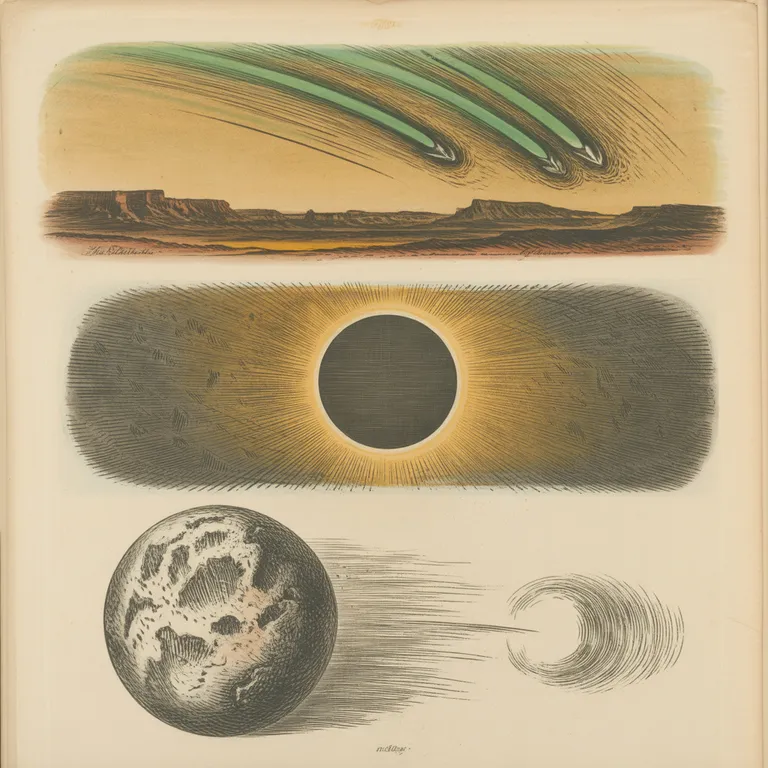
138 green fireballs over New Mexico. Project Twinkle never closed it.
Between December 1948 and the end of 1950, military observers across New Mexico, Arizona, and Texas filed 138 separate reports of green fireballs — slow, silent, low-altitude meteor-like objects that appeared to descend and then level off. The U.S. Air Force created Project Twinkle in 1949 explicitly to investigate them. Project Twinkle ran for two years, never caught one on instrument, and closed in 1951 with the cases unresolved. Green fireballs of similar character have been reported sporadically since. The Air Force has not re-opened the file.
Project Twinkle closed unsolved in 1951.