
The Loch Ness Monster
Modern Loch Ness sightings begin in 1933 with a road-construction crew's report and a newspaper article that gave the creature its nickname. Hundreds of eyewitness accounts, photographs, and sonar contacts have followed across ninety-plus years. Three exhaustive scientific surveys — Edward Mountain 1934, Operation Deepscan 1987, Neil Gemmell's eDNA study 2018–19 — found no evidence of a large unknown vertebrate, but none could fully account for every sighting or sonar return.
Our read
Evidence — 9 claims
6 supported · 1 resolved · 1 contested · 1 open
Sources — 5
5 sources · secondary + academic
Fabricated or hoax
The record points to deliberate fabrication or staged evidence.
- SupportedJohn and Aldie Mackay reported a large disturbance in Loch Ness on May 2, 1933; the Inverness Courier coined the 'monster' nickname.
- ResolvedThe 1934 Surgeon's Photograph was a staged hoax using a toy submarine with a sculpted neck, per Christian Spurling's 1993 deathbed admission.
- SupportedEdward Mountain's 1934 photographic survey of Loch Ness produced no conclusive evidence of a large unknown animal.
- SupportedOperation Deepscan (1987) recorded three sonar returns larger than fish at ~180m depth; none were identified.
- ContestedAdrian Shine has said the Deepscan anomalies are consistent with large sturgeon, debris, or thermoclines — but has not confirmed any of these.
- SupportedGemmell's 2018–19 eDNA survey found no reptile, large-mammal, or unknown vertebrate DNA in 250 Loch Ness water samples.
- SupportedThe eDNA survey found unusually high concentrations of eel DNA, prompting the 'large eel' hypothesis for some sightings.
- OpenNo eel large enough to match Nessie witness descriptions has ever been documented in Loch Ness.
- SupportedDarren Naish argues Nessie fits a broader cryptozoology pattern of misidentification, pattern-matching, and hoaxing layered over each other.
What remains unexplained
No large unknown vertebrate confirmed; eDNA rules out reptiles but the eel hypothesis is unconfirmed. Three Deepscan sonar anomalies remain unidentified. The 90-year eyewitness record has no single agreed explanation.
- 01The three 1987 Deepscan sonar returns at ~180m depth have never been definitively identified.
- 02The eel hypothesis is plausible but no large eel matching witness descriptions has been documented in the loch.
- 03Hundreds of eyewitness accounts predate and postdate the hoaxed Surgeon's Photograph and remain without a unified explanation.
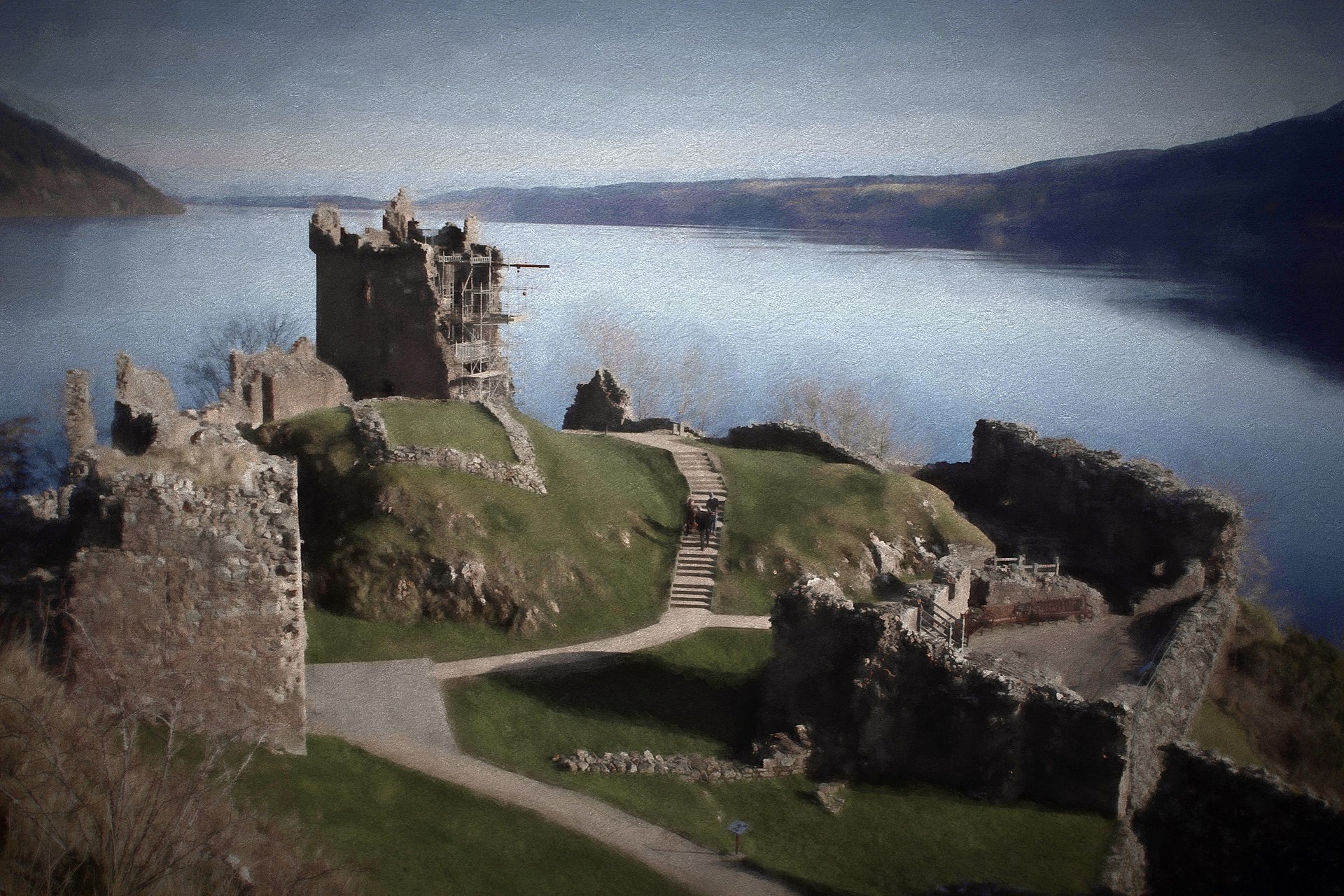
Loch Ness, Scottish Highlands. May 2, 1933. John and Aldie Mackay were driving along the northern shore when they saw something large disturbing the water. The Inverness Courier ran the story, coined the nickname, and kicked off one of the longest-running cryptid cases in recorded history. Ninety-plus years later, the loch has been photographed, filmed, sonar-swept, and DNA-sampled. The creature has not been found. Neither has a complete explanation for everything that has been reported.
What happened
The Mackay sighting was not the first report of something strange in Loch Ness — local folklore predates it by centuries — but it was the one that went national. What followed was a cascade: hundreds of eyewitness accounts, grainy photographs, and sonar contacts across nine decades. The most famous image, the so-called Surgeon's Photograph of 1934, showed a long neck rising from dark water. It ran in newspapers worldwide. For sixty years it was the canonical Nessie image.
In 1993, a man named Christian Spurling told investigators Alastair Boyd and David Martin, on his deathbed, that the photograph had been staged — a toy submarine fitted with a sculpted neck. The admission was published in 1994. The single most-cited piece of photographic evidence was a hoax.
The evidence
Three major scientific efforts have tried to settle the question.
Edward Mountain's 1934 photographic survey deployed observers around the loch for weeks. They collected sightings and photographs. Nothing conclusive emerged.
Operation Deepscan in 1987 sent 24 sonar boats in a line from one end of the loch to the other — the most systematic sweep ever attempted. Three anomalous returns appeared at depths of around 180 meters, larger than fish, unidentified. No follow-up identification was possible. Adrian Shine, who organized the operation, has consistently said the returns are consistent with large sturgeon, debris, or thermoclines. Consistent with — not confirmed as.
The most recent and arguably most rigorous effort was Neil Gemmell's environmental-DNA survey in 2018–19, published by the University of Otago. The team pulled 250 water samples and sequenced everything they found. No reptile DNA. No large-mammal DNA. No unknown vertebrate DNA of any kind. What they did find: an unusually high concentration of eel DNA. Gemmell floated the possibility that some sightings reflect a large eel — though no eel large enough to match witness descriptions has ever been documented in the loch.
Darren Naish, in Hunting Monsters (2017), situates Nessie within the broader pattern of cryptozoology: cases where genuine misidentification, wishful pattern-matching, and occasional deliberate hoaxing layer over each other until the signal is almost impossible to separate from the noise.
What the explanations don't explain
The Surgeon's Photograph being a hoax explains the Surgeon's Photograph. It doesn't explain the Mackay sighting, or the Operation Deepscan returns, or the other accounts that accumulated before and after the fake image entered the record.
The eDNA survey is genuinely thorough. It's also a snapshot — water samples from a specific period, in a loch that is 37 kilometers long, 230 meters deep, and heavily silted at the bottom. Absence of DNA is strong evidence. It is not the same as a closed case.
The three sonar anomalies from Deepscan remain unidentified. Shine's preferred explanations are plausible. They are not confirmed.
What's still open
No large unknown vertebrate has been found in Loch Ness. The eDNA survey makes a plesiosaur or large unknown reptile effectively untenable — the DNA would be there. A large eel remains possible but unconfirmed. The sonar returns from 1987 have no definitive identification. The eyewitness record, spanning ninety years and hundreds of accounts, has no single agreed-upon explanation. The loch is still there. So is the question.
Was the famous Surgeon's Photograph of the Loch Ness Monster real?
No. Christian Spurling admitted on his deathbed in 1993 that the 1934 photograph was staged using a toy submarine fitted with a sculpted neck. Investigators Alastair Boyd and David Martin published the confession in 1994, effectively retiring the most iconic Nessie image as a deliberate hoax.
What did the 2019 eDNA survey find in Loch Ness?
The University of Otago team, led by Neil Gemmell, analyzed 250 water samples and found no DNA from reptiles, large mammals, or any unknown vertebrate. They did find an unusually high concentration of eel DNA, which led Gemmell to suggest some sightings might involve a large eel — though no eel matching witness descriptions has been documented in the loch.
What were the unexplained sonar contacts from Operation Deepscan?
In October 1987, a line of 24 sonar boats swept the full length of Loch Ness and recorded three anomalous returns at depths of around 180 meters, each larger than a fish. No follow-up identification was possible, and organizer Adrian Shine has said the returns are consistent with large sturgeon, debris, or thermoclines — consistent with, not confirmed as.
Does the absence of DNA evidence from the 2019 survey close the Loch Ness case?
It makes certain explanations — a large reptile, a plesiosaur, any unknown large vertebrate — effectively untenable, since the DNA would have shown up. What it doesn't do is account for every sonar return or eyewitness account, and the eel hypothesis remains open but unconfirmed.
When did Loch Ness Monster sightings begin?
The modern wave of sightings is typically dated to May 2, 1933, when the Inverness Courier reported John and Aldie Mackay's account of something large disturbing the water near the northern shore. Local folklore about creatures in the loch predates that report by centuries, but the 1933 newspaper story is what gave the phenomenon its name and national profile.
Cryptids
Mothman of Point Pleasant
Between November 1966 and December 1967, residents of Point Pleasant, West Virginia reported repeated encounters with a roughly seven-foot-tall winged humanoid with glowing red eyes — most often near an abandoned WWII munitions complex. The sightings stopped, by most accounts, on December 15, 1967 — the day the Silver Bridge across the Ohio River collapsed during rush hour, killing 46 people.
1966-11-15
Cryptids
The Patterson-Gimlin Film
Patterson and Gimlin said they filmed a large bipedal figure at Bluff Creek on October 20, 1967. The grainy minute became Bigfoot's defining artifact. A 2026 documentary now presents an alleged 1966 rehearsal reel and Patterson-family testimony as evidence of staging, turning a long-running argument into a specific reel-authentication question.
1967-10-20
Cryptids
The Chupacabra
The chupacabra — Spanish for 'goat-sucker' — emerged from a 1995 wave of reports near Canovanas, Puerto Rico, where the original eyewitness described a spiny, red-eyed, alien-like beast. Folklorist Benjamin Radford traced that description to the 1995 sci-fi film Species. The later hairless 'dog' version from Texas and Mexico has been DNA-tested repeatedly: every carcass is a coyote or dog with mange. It is folklore — a real legend, no real monster.
Surgeon's Photograph admission (1994)
1994-03
The 1934 'surgeon's photograph' — for sixty years the canonical image — was a staged hoax
Christian Spurling, on his deathbed in 1993, told investigators Alastair Boyd and David Martin that the photograph had been staged using a toy submarine fitted with a sculpted neck. The admission was published in 1994. The hoax explains the single most iconic Nessie image and removes a piece of evidence many later sightings implicitly leaned on.
Operation Deepscan (1987)
1987-10-09
Three 'unidentified targets larger than fish' but no animal recovered or imaged
A line of 24 sonar boats swept the loch end-to-end. The three anomalous returns appeared at depths of around 180 m. No follow-up identification was possible. Deepscan organizer Adrian Shine has consistently said the results are consistent with large sturgeon, debris, or thermoclines.
Gemmell eDNA survey (2019)
2019-09
No reptile or large-mammal DNA in the loch; substantial eel DNA
The team sequenced environmental DNA from 250 water samples. They found no DNA from reptiles, large mammals, or unknown vertebrates of any kind. They did find an unusually high concentration of eel DNA, leading Gemmell to suggest the 'eel hypothesis' — that some sightings may be a large eel, though one large enough to match Nessie descriptions has never been documented in the loch.
- Inverness Courier report of John and Aldie Mackay sighting, May 2, 1933Quoted or summarized under fair use — follow the link for the original
- Edward Mountain, 'Solving the Mystery of Loch Ness' (1934 photographic survey)Public record — free to reuse
- Adrian Shine, Operation Deepscan (sonar sweep of full loch, October 1987)Quoted or summarized under fair use — follow the link for the original
- Neil Gemmell, University of Otago environmental-DNA survey of Loch Ness (2018–2019; results published 2019)Quoted or summarized under fair use — follow the link for the original
- Darren Naish, 'Hunting Monsters: Cryptozoology and the Reality Behind the Myths' (Sirius, 2017)Quoted or summarized under fair use — follow the link for the original
This account draws on publicly available sources and historical records. Report a factual error → How we source and correct →