
Mothman of Point Pleasant
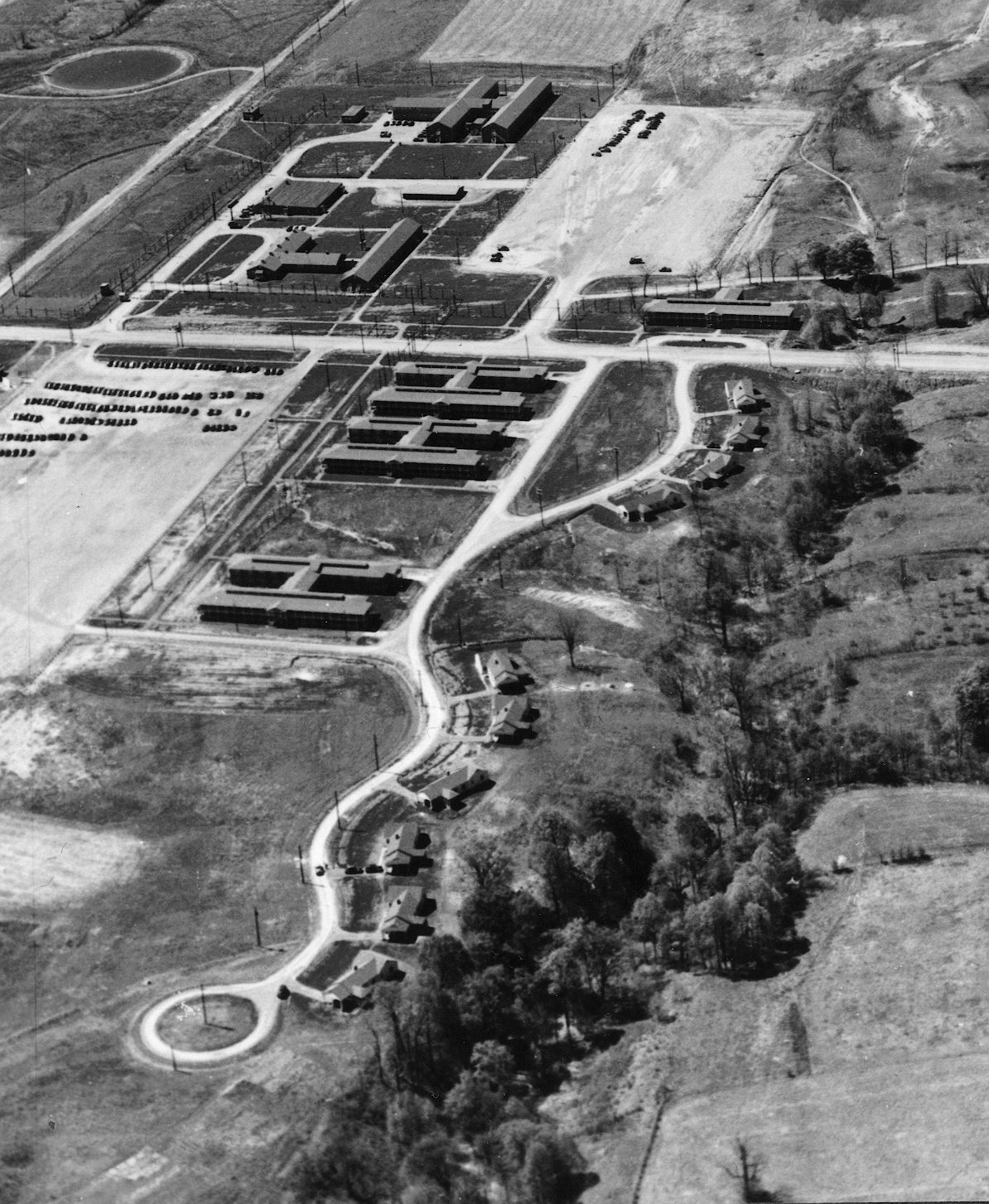
Between November 1966 and December 1967, residents of Point Pleasant, West Virginia reported repeated encounters with a roughly seven-foot-tall winged humanoid with glowing red eyes — most often near an abandoned WWII munitions complex. The sightings stopped, by most accounts, on December 15, 1967 — the day the Silver Bridge across the Ohio River collapsed during rush hour, killing 46 people.
Our read
Evidence — 10 claims
5 supported · 2 resolved · 2 contested · 1 open
Sources — 5
5 sources · secondary + court / archive + government records
Contested
Competing readings of the record remain live.
- SupportedRoger and Linda Scarberry and Steve and Mary Mallette filed a sighting statement with Mason County Sheriff's Department on November 16, 1966.
- SupportedThe witnesses described a roughly seven-foot-tall winged humanoid with glowing red eyes near the TNT area.
- SupportedMason County Sheriff's Department recorded the reports without formally classifying what the witnesses had seen.
- SupportedSightings continued from November 1966 through December 1967, with John Keel documenting over a hundred encounters.
- ResolvedThe Silver Bridge collapsed on December 15, 1967, killing 46 people.
- ResolvedNTSB attributed the Silver Bridge collapse to a corrosion-induced fatigue crack in eyebar 330 of the suspension chain.
- SupportedThe Mothman is not part of the NTSB's Silver Bridge investigation record.
- ContestedDr. Robert L. Smith proposed the sightings were misidentified sandhill cranes wandered outside their normal range.
- ContestedJoe Nickell's 2002 review proposed barn owl or barred owl as the explanation, citing red eyeshine and silent flight.
- OpenThe bird hypotheses do not comfortably fit close-range humanoid-form descriptions from the nearest encounters.
What remains unexplained
The ornithological explanations fit many sightings but leave the closest-range humanoid-form encounters unaccounted for. No conventional explanation fully covers the original Scarberry-Mallette statement. The creature's identity remains open.
- 01The Scarberry-Mallette encounter — four witnesses, same account, filed same night — has no fully satisfying conventional explanation on record.
- 02The sandhill crane and owl hypotheses explain nocturnal red-eye sightings but not the reported bipedal humanoid stance or vehicle pursuit.
- 03The connection between the Mothman sightings and the Silver Bridge collapse is temporal only; no causal link has been established or investigated.
Point Pleasant, West Virginia. November 15, 1966. Roger and Linda Scarberry, along with Steve and Mary Mallette, were driving near an abandoned World War II munitions complex outside town when their headlights caught something. Roughly seven feet tall. Winged. Eyes that reflected red in the dark. It followed their car — or kept pace with it — for several miles before they reached the sheriff's office and filed a statement.
That statement is on record with the Mason County Sheriff's Department. Deputies took it seriously enough to file it. They did not classify what the Scarberrys and Mallettes had seen.
What happened
The Scarberry-Mallette encounter was the first documented report, but not the last. Between November 1966 and December 1967, Point Pleasant residents filed dozens of similar accounts — a large winged humanoid, glowing red eyes, silent flight, often sighted near the abandoned TNT area where the munitions complex had stood. John Keel, who spent months in the region interviewing witnesses for what became The Mothman Prophecies (1975), catalogued over a hundred encounters. He was not a detached observer — Keel believed something genuinely strange was happening — but the witness volume he documented is part of the record regardless of his interpretive frame.
The sightings stopped on December 15, 1967. That evening, the Silver Bridge across the Ohio River collapsed during rush hour. The NTSB's investigation attributed the failure to a corrosion-induced fatigue crack in eyebar 330 of the suspension chain — a purely structural finding. Forty-six people died. The Mothman and the bridge are connected in folk memory; they are not connected in the engineering record.
The evidence
The Scarberry-Mallette statement is the closest thing to a primary document the case has. Four witnesses, same account, filed the same night with law enforcement. The Mason County Sheriff's Department recorded the reports without making a determination.
Two ornithological explanations have been proposed. In late 1966, West Virginia University ornithologist Dr. Robert L. Smith suggested a sandhill crane — large, capable of a reddish eye-reflection, occasionally appearing far outside its normal range. Joe Nickell's 2002 review in the Skeptical Inquirer proposed barn owl or barred owl: nocturnal, silent in flight, producing red eyeshine when caught in headlights, common in the kind of overgrown industrial site the TNT area had become.
Both explanations are reasonable. Neither fits the close-range humanoid-form descriptions — the upright stance, the roughly human silhouette, the reported height — from the encounters where witnesses were nearest to the thing.
What the explanations don't explain
The crane and owl theories cover a lot of ground. Nocturnal birds in an abandoned industrial area, seen at speed from a car, in the dark — that's a plausible recipe for a misidentification. The red-eye reflection is real; any owl caught in a direct light source will produce it.
What they don't comfortably cover is the Scarberry-Mallette encounter specifically: four people, stationary or nearly so, describing a bipedal humanoid form that then kept pace with a moving vehicle. A sandhill crane's wingspan runs around six feet; it does not stand upright or pursue cars. An owl doesn't either.
The crane and owl hypotheses are the strongest conventional explanations on offer. They probably account for some of the sightings. Whether they account for all of them — particularly the closest-range encounters — is the part of the record that stays open.
What's still open
The Silver Bridge collapse has an explanation: NTSB HAR-71-2 is thorough and the engineering finding has not been seriously contested. The Mothman is not in that report. The timing is what it is.
What remains unresolved is the core of the Scarberry-Mallette statement and the cluster of close-range humanoid-form encounters that followed it. The bird hypotheses are good. They don't quite reach. Nobody has produced a better explanation that fits the full description on record — and nobody has produced the creature either.
What did the original Mothman witnesses actually report?
On November 15, 1966, Roger and Linda Scarberry and Steve and Mary Mallette filed a statement with the Mason County Sheriff's Department describing a roughly seven-foot-tall winged humanoid with glowing red eyes near the abandoned TNT area outside Point Pleasant. They reported it kept pace with their moving vehicle for several miles. Deputies recorded the statement without making a determination about what the witnesses had seen.
Is the Mothman connected to the Silver Bridge collapse?
The sightings are connected in folk memory — they occurred in the same town during the same thirteen-month period, and both ended on December 15, 1967. The NTSB's investigation of the bridge collapse attributed it entirely to a corrosion-induced fatigue crack in the suspension chain; the Mothman does not appear in the engineering record. The timing is real. The causal link is not established.
What's the most credible conventional explanation for the Mothman sightings?
West Virginia University ornithologist Dr. Robert L. Smith proposed a misidentified sandhill crane in 1966, and Joe Nickell's 2002 Skeptical Inquirer review argued for barn owl or barred owl — both capable of producing red eyeshine and silent flight in the kind of overgrown industrial environment the TNT area had become. These explanations fit many of the reported sightings but don't comfortably account for the close-range encounters where witnesses described a bipedal humanoid form and reported height of around seven feet.
How many people reported seeing the Mothman?
Researcher John Keel, who spent months in Point Pleasant interviewing witnesses for his 1975 book *The Mothman Prophecies*, documented over a hundred reported encounters between November 1966 and December 1967. The Mason County Sheriff's Department recorded multiple witness statements during the same period. The total witness count across all reports runs into the dozens at minimum.
Where did the Mothman sightings mostly occur?
The majority of sightings were clustered around the abandoned World War II munitions complex outside Point Pleasant, locally known as the TNT area — a sprawling, overgrown industrial site that had been decommissioned after the war. Some sightings were reported elsewhere in Mason County. The concentration near the TNT area is consistent with both the paranormal accounts and the ornithological explanations, since abandoned industrial sites make good habitat for large birds.
Cryptids
The Patterson-Gimlin Film
Patterson and Gimlin said they filmed a large bipedal figure at Bluff Creek on October 20, 1967. The grainy minute became Bigfoot's defining artifact. A 2026 documentary now presents an alleged 1966 rehearsal reel and Patterson-family testimony as evidence of staging, turning a long-running argument into a specific reel-authentication question.
1967-10-20
Cryptids
The Loch Ness Monster
Modern Loch Ness sightings begin in 1933 with a road-construction crew's report and a newspaper article that gave the creature its nickname. Hundreds of eyewitness accounts, photographs, and sonar contacts have followed across ninety-plus years. Three exhaustive scientific surveys — Edward Mountain 1934, Operation Deepscan 1987, Neil Gemmell's eDNA study 2018–19 — found no evidence of a large unknown vertebrate, but none could fully account for every sighting or sonar return.
1933-05-02
Cryptids
The Chupacabra
The chupacabra — Spanish for 'goat-sucker' — emerged from a 1995 wave of reports near Canovanas, Puerto Rico, where the original eyewitness described a spiny, red-eyed, alien-like beast. Folklorist Benjamin Radford traced that description to the 1995 sci-fi film Species. The later hairless 'dog' version from Texas and Mexico has been DNA-tested repeatedly: every carcass is a coyote or dog with mange. It is folklore — a real legend, no real monster.
Mason County Sheriff's Department (West Virginia)
1966-11-16
Witness reports recorded — no determination of identity
Deputies took statements from the Scarberry and Mallette couples after the initial November 15 sighting. No formal classification of the creature was made; reports were filed alongside related sightings that followed.
Dr. Robert L. Smith (West Virginia University, ornithology)
1966-12
Probable misidentified sandhill crane
Smith proposed in late 1966 that the descriptions — large bird, reddish eye-spots, ~6 ft wingspan — were consistent with a sandhill crane wandered far outside its normal range. The classification covers some sightings; it does not fit the humanoid-stance descriptions from the closest-range encounters.
Joe Nickell (CSI / Skeptical Inquirer)
2002-03
Misidentified barn owl or barred owl
Nickell's 2002 review argued that nocturnal owls in the abandoned TNT area produced the red-eye reflections and silent flight behaviors witnesses reported. Like the crane theory, it explains many sightings but does not fit the close-range humanoid-form encounters.
NTSB (Silver Bridge collapse, December 15, 1967)
1971-04
Bridge failure cause — corrosion-induced stress crack in an I-bar eyebar; no paranormal element entered the investigation
The NTSB attributed the collapse to a fatigue crack in eyebar 330 of the suspension chain. The Mothman story is not part of the NTSB record. The proximity is folk-narrative, not engineering.
- John A. Keel, 'The Mothman Prophecies' (Saturday Review Press, 1975)Quoted or summarized under fair use — follow the link for the originalaccessed 2026-05-12
- Roger and Linda Scarberry — original sighting statement, Mason County Sheriff's Department, November 16, 1966Public record — free to reuseaccessed 2026-05-12
- NTSB Highway Accident Report HAR-71-2 — Collapse of US 35 Highway Bridge, Point Pleasant, WV, December 15, 1967Public record — free to reuseaccessed 2026-05-12
- Joe Nickell, 'Mothman Solved!' (Skeptical Inquirer, March/April 2002)Quoted or summarized under fair use — follow the link for the originalaccessed 2026-05-12
- Mothman Museum, Point Pleasant — exhibit and archival catalogueQuoted or summarized under fair use — follow the link for the originalaccessed 2026-05-12
This account draws on publicly available sources and historical records. Report a factual error → How we source and correct →
As an Amazon Associate I earn from qualifying purchases. Other affiliate links may earn a commission at no cost to you.